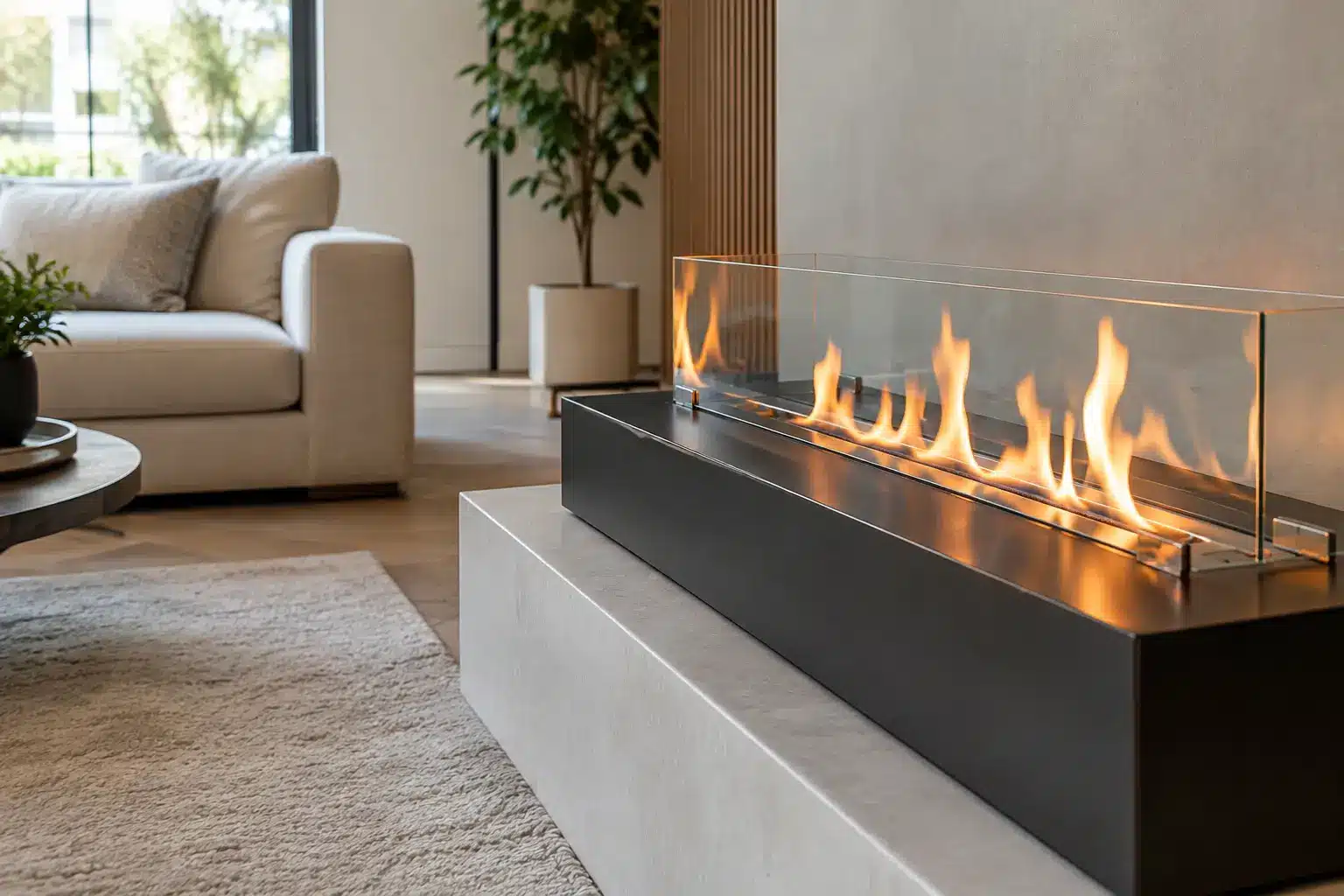
A real flame can change the feel of a room in minutes. For homes where a traditional wood fire, gas connection or flue is not practical, a bioethanol fireplace without chimney can bring warmth, movement and atmosphere without major building work.
It is an appealing option for Northern Rivers homes, apartments, renovations and entertaining areas where flexibility matters. But chimney-free does not mean decision-free. The right fireplace needs the right location, adequate ventilation, safe clearances and a design that suits how you actually live.
How does a bioethanol fireplace without a chimney work?
Bioethanol fireplaces burn ethanol fuel, typically produced from plant-based sources. The fuel sits in a purpose-built burner and creates a visible, smoke-free flame. Unlike a wood heater, there is no ash, soot or stack of firewood to manage. Unlike many gas fireplaces, there is no fixed gas line required.
Because bioethanol produces no smoke or chimney deposits during normal operation, many models do not need a flue or chimney. This opens up more placement options, from a feature wall in a living room to a freestanding fireplace in a covered outdoor space.
The flame is genuine, not a visual effect. That is a big part of the appeal, but it also means the fireplace must be treated as a live fuel-burning appliance. It produces heat, water vapour and carbon dioxide, so ventilation and room suitability are essential. Always follow the manufacturer’s instructions for the model you choose, rather than assuming every chimney-free fireplace can go anywhere.
Where bioethanol fireplaces make sense
A bioethanol fireplace is often chosen for ambience first and supplementary warmth second. It can take the chill out of a sitting area, add a focal point to a dining room or make an outdoor entertaining zone feel inviting after sunset.
They work particularly well when renovating an existing home where installing a flue would be costly or visually disruptive. A wall-mounted model can create a clean, contemporary look without taking up much floor space. A freestanding design can suit a reading corner, enclosed patio or open-plan room, provided it has been selected and positioned correctly.
For design-conscious homeowners, the flexibility is hard to ignore. There are built-in burners for joinery and feature walls, compact tabletop styles, room dividers and substantial freestanding fireplaces that make a statement before they are even lit. The key is to choose the fireplace around the space, not simply choose the largest flame available.
In a coastal home, this can be especially useful. A bioethanol fireplace lets you create a cosy zone for winter evenings without committing to extensive structural changes. It can also complement an outdoor kitchen, pizza oven or lounge setting by giving guests a warm place to gather when dinner runs long.
The trade-off: ambience versus whole-home heating
Bioethanol fires provide real heat, but they are not automatically a replacement for a properly sized wood, gas or electric heating system. Their output varies by burner size, fuel capacity and the way the room is built. High ceilings, open stairwells, large glazing areas and drafty layouts can all limit how much warmth you feel.
If your priority is heating the family room every night through winter, compare bioethanol with other fireplace options before deciding. A flued gas fire, efficient wood heater or quality electric fireplace may be better suited to the job, depending on your home and preferred fuel source.
If your goal is to make a particular zone feel special – the lounge after dinner, a formal sitting room or a protected alfresco area – bioethanol can be an excellent fit. Think of it as a fireplace that brings atmosphere and localised comfort, rather than a one-size-fits-all solution for the entire house.
Safety comes before styling
The absence of a chimney does not remove the need for careful planning. A bioethanol fireplace must have the clearances, ventilation and installation conditions specified by its manufacturer. This is especially important with built-in models, which should never be treated as a simple joinery project.
Before choosing a location, consider these practical checks:
- Is the room large enough and ventilated as required for that specific model?
- Are walls, flooring, curtains, furniture and artwork outside the required clearances?
- Is the fireplace designed for indoor use, outdoor use or both?
- Is there a stable, heat-safe surface and a clear path around the appliance?
- Can fuel be stored securely, away from heat, flame and children?
A good installation looks effortless because the details have been handled properly. Avoid placing a fireplace where children or pets can brush past it, where a door can swing into the flame area or where breezes can affect an outdoor flame. For homes with young children, a physical barrier or a fireplace design with appropriate protection may be worth considering.
Never refill a burner while it is alight, warm or holding residual heat. Let it cool fully, use only the fuel specified by the manufacturer and clean up any spill immediately according to the product instructions. This is not the place for improvised fuel containers or a quick top-up before guests arrive.
Built-in, freestanding or tabletop?
Your preferred look will usually point you towards the right category. Built-in bioethanol fireplaces offer the most tailored result. They can sit within a fireplace opening, a media wall or a custom feature, giving a room a polished architectural finish. They also require the most careful planning around non-combustible materials, ventilation and access to the burner.
Freestanding fireplaces are a strong choice when you want flexibility. They can become a centrepiece in a lounge or a sheltered outdoor room without the commitment of a major renovation. Their weight, stability and clearances still matter, so choose a location you can keep clear rather than one that only works when the furniture is rearranged.
Tabletop burners are compact and decorative. They are best viewed as a small atmospheric flame rather than a serious source of warmth. For a dinner table or coffee table, they can be effective, but only where the product is designed for that use and the surface, surrounding space and household routine make it safe.
Indoor and outdoor placement are not the same
A fireplace that suits a living room may not be right for an exposed deck, and a burner made for outdoor entertaining may not be approved for indoor use. Wind, rain, salt air and casual foot traffic all affect outdoor placement.
In the Ballina and Northern Rivers climate, an outdoor fire feature is often most useful in a covered, protected area that extends the season without exposing the appliance to weather. Check whether the model needs to be brought inside after use, whether it has a weather-resistant finish and whether coastal conditions could affect its appearance or performance over time.
Apartment owners and townhouse residents should also check strata by-laws or body corporate requirements before buying. Even when no flue is needed, there may be rules about open flames on balconies, shared outdoor areas or internal renovations.
What to look for before you buy
The best bioethanol fireplace is not necessarily the one with the widest flame. Start with the intended space, then consider burner capacity, burn time, heat output, safety features, materials and the manufacturer’s installation requirements.
Look for a quality burner with a reliable extinguishing method and clear operating instructions. Well-made models use materials designed to manage heat and fuel safely, and they provide the technical information needed for a proper installation. A premium fireplace should feel considered from the finish and flame presentation through to the practical details of filling, lighting and cleaning.
It is also worth seeing a fireplace in person where possible. The scale of the flame, the depth of the unit and the finish of the materials can look very different in a showroom than in a product image. At Ballina Heating and Outdoor Leisure, homeowners can compare fireplace styles and talk through how a feature might work within a living room, renovation or outdoor entertaining area.
A fireplace feature that fits your life
A bioethanol fireplace without a chimney offers a simple way to add a real flame where a conventional fireplace may not be possible. It suits homeowners who value design freedom, low-maintenance ambience and a warmer setting for relaxed evenings at home.
Choose it for the right reason, plan its location carefully and treat fuel safety as part of the purchase, not an afterthought. When the fireplace suits the room and the way your household gathers, it can turn an ordinary corner into the place everyone naturally settles into.