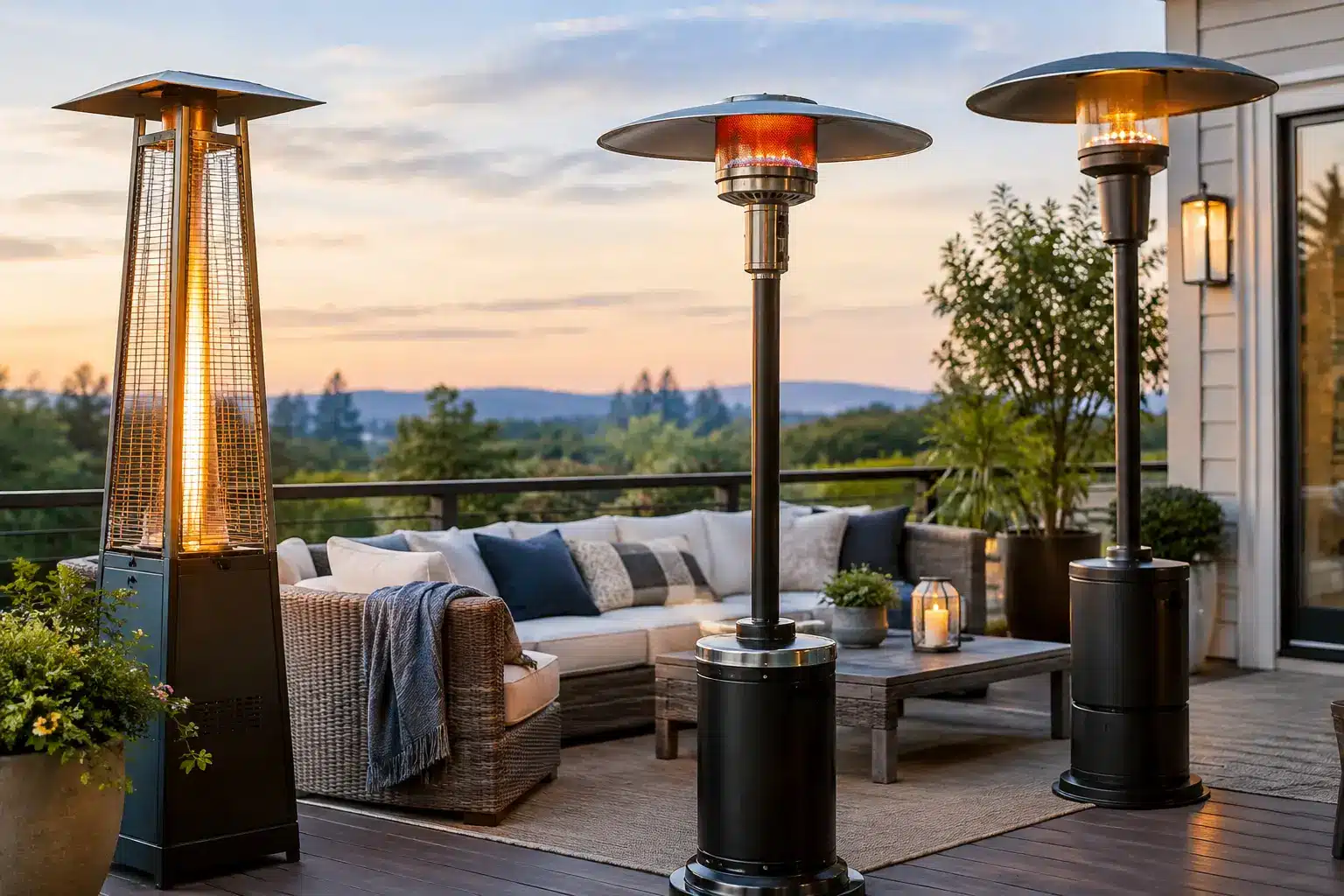
A cool Northern Rivers evening should not be the moment everyone leaves the deck for the lounge room. The right outdoor heater can keep dinner conversations going, make winter barbecues more inviting and give a covered patio a genuine all-season role in your home. Knowing how to choose a patio heater starts with one practical question: where do you want the warmth to land?
A heater is not simply an outdoor accessory. It is part of how your entertaining area works, alongside the BBQ, pizza oven, dining setting and shelter overhead. Choose for the space, the people using it and the way you gather, rather than picking the biggest model on the floor.
How to choose a patio heater for your space
Start by looking at the area as it is used, not just its square metres. A small, sheltered courtyard with a two-person setting needs a very different heater from a broad verandah used for long family lunches. Think about where people sit, stand and serve food, as well as where the breeze usually comes through.
Patio heaters create warmth in different ways. Gas heaters generally warm a wider surrounding area, while electric radiant heaters direct heat towards people and surfaces in their line of sight. This matters in coastal conditions. On an exposed deck, a broad cloud of warmth can disappear quickly in a southerly breeze. A focused radiant heater can often feel more effective when aimed at a dining table or outdoor lounge.
Measure the usable entertaining zone rather than the entire backyard. If guests naturally gather around the table and outdoor kitchen, heat that zone well. Trying to heat a large open lawn is rarely efficient or comfortable.
Sheltered, semi-enclosed or open?
Your level of shelter will shape almost every decision. A covered alfresco area holds warmth better than an open patio, but it also requires careful attention to clearances, ventilation and the heater manufacturer’s installation instructions.
For open spaces, portable gas models can be a flexible choice because they offer strong output and can be moved closer to where the action is. In a more protected alfresco area, a wall-mounted or ceiling-mounted electric radiant heater can keep the floor clear and provide targeted warmth without interrupting the view.
Do not assume that a roof makes every heater suitable. Gas appliances must only be used in appropriate outdoor, well-ventilated areas and need the correct clearances from ceilings, walls, furniture and umbrellas. If you are planning a fixed installation, get advice before buying so the heater suits the structure as well as the lifestyle.
Choose the fuel type that suits your routine
The best patio heater is often the one that fits naturally into the way you entertain. Gas and electric heaters each have clear strengths, and the right option depends on your setup.
Gas patio heaters
LPG gas patio heaters are a familiar choice for larger outdoor areas. Freestanding mushroom and pyramid styles can deliver generous heat and become a feature beside a dining setting or poolside lounge. They are particularly useful where there is no convenient electrical connection and where you want the option to reposition the heater.
The trade-off is that you will need to manage LPG bottles, allow room for the unit and use it only in suitable, ventilated outdoor conditions. A freestanding model also needs a stable location away from busy walkways, children’s play areas and anything that could catch or blow into the heater.
Gas works well for homeowners who host bigger groups, enjoy flexible furniture layouts or need solid warmth over a broader area. If the patio is exposed to wind, position the heater thoughtfully rather than expecting it to overcome the weather on its own.
Electric radiant heaters
Electric outdoor heaters produce radiant warmth, similar to the pleasant feeling of sunlight on a cool day. They heat people and nearby objects directly, which makes them a smart option for covered patios, balconies, outdoor kitchens and dining zones.
Fixed electric heaters can look neat and intentional, especially when installed on a wall, ceiling or beam. There is no gas bottle to store or replace, and many models offer simple controls for quick warmth when guests arrive. They can also be easier to integrate into a new build or renovation where power and mounting locations are planned early.
Their main limitation is reach. A radiant heater needs to be correctly positioned and aimed. One unit may be perfect above a six-seat table but leave the lounge area feeling cool. Larger entertaining spaces may benefit from two or more strategically placed heaters rather than one oversized unit.
For a hardwired electric installation, use a licensed electrician and follow the appliance requirements for mounting height, clearance and weather protection. It is a small piece of planning that makes a big difference to performance and safety.
Match heat output to the way you entertain
High output sounds appealing, but more power is not automatically better. An oversized heater in a compact covered area can be uncomfortable, while an undersized one will leave guests reaching for jumpers.
Think about your usual gathering size. A couple enjoying a quiet weeknight meal needs focused, gentle warmth. A family that regularly hosts birthdays, pizza nights and long Sunday lunches may need greater coverage or several heating points. The shape of the area matters too. Long, narrow patios often suit wall-mounted radiant heaters, while a square open entertaining zone may suit a centrally placed freestanding gas unit.
Ask where the heater will be positioned and how far it will sit from guests. Heat output figures are useful, but they do not tell the full story without context. Wind, ceiling height, the amount of enclosure and even the material of your outdoor furniture can affect how warm a space feels.
Plan placement before choosing the style
A patio heater should make the area more comfortable, not harder to move around. Before settling on a model, stand in the space and picture a typical evening. Where does someone carry food from the kitchen? Where do children run through? Can chairs be pulled back without coming too close to the heater?
Freestanding heaters need a stable, level base and clear space around them. Avoid placing them under low roofs, close to curtains or screening, beside umbrellas, or where wind can push heat towards combustible materials. If a heater is portable, it still deserves a permanent, sensible home when in use.
Wall and ceiling-mounted heaters can be excellent space-savers, particularly in compact courtyards. They also help maintain a clean outdoor dining layout, with no base or gas bottle sitting beside the table. Their success comes down to correct mounting position. Aim them where people sit, not at the empty end of the patio or straight into a thoroughfare.
A qualified installer can help assess electrical supply, mounting surfaces and required clearances. This is especially worthwhile for a new outdoor kitchen, a renovated alfresco area or any space with a lined ceiling.
Consider materials, weather and coastal living
Outdoor heating in Ballina and the Northern Rivers needs to cope with more than cold nights. Salt air, humidity, heavy rain and strong summer storms can be tough on outdoor products. Look for quality construction, suitable outdoor ratings and finishes designed for the conditions around your home.
Stainless steel, powder-coated finishes and purpose-designed weather protection can all help, but no heater should be treated as maintenance-free. Keep it clean, check connections and cords regularly, and use an appropriate cover when the heater is cool and not in use. If your patio is very exposed, a portable model that can be stored away may be more practical than a permanently installed heater.
It is also worth choosing a design that belongs with the rest of the space. A sleek electric heater may complement a contemporary outdoor kitchen, while a statement gas pyramid can bring atmosphere to a larger entertaining area. Good heating should feel like part of the setting, not an afterthought parked in the corner.
Do not overlook running costs and convenience
The upfront price is only one part of the decision. Gas heaters require LPG refills or bottle swaps, while electric heaters add to your power use. Actual running costs vary with the heater’s output, local energy prices and how often you use it, so compare models based on how you will genuinely use them.
Convenience has value too. If you entertain spontaneously, an electric heater with simple switching or controls may suit your household. If you want to warm different spots around a large yard, the portability of LPG may be more useful. There is no universal winner – only the option that makes your outdoor area easier to enjoy.
See the warmth before you buy
Photos and specifications are helpful, but patio heaters are easier to judge in person. You can see the scale of a freestanding model, compare finishes with outdoor furniture and talk through whether gas or electric is better for your layout. At Ballina Heating and Outdoor Leisure, the showroom experience makes it easier to choose a heater that fits the way you live, rather than simply filling a space.
Give your patio the same thought you would give your indoor living room. With the right heater, a cool evening becomes a reason to set the table outside, fire up the barbecue and stay a little longer.