A fireplace changes more than the temperature of a room. It creates the spot where everyone gathers after dinner, gives a renovation a real focal point and makes a damp Northern Rivers winter feel far more inviting. This indoor fireplace buying guide will help you choose a heating solution that suits your home, routine and the way you want to live.
The best choice is rarely about buying the biggest unit or choosing the most dramatic flame. It comes down to the room you need to heat, the fuel you can access, the installation your home can accommodate and how hands-on you want to be. Get those decisions right first and the fireplace becomes a comfort you will look forward to using every year.
Start with the room, not the fireplace
Before falling for a particular design, look closely at the space it needs to heat. Measure the room and consider ceiling height, window size, insulation, open stairwells and adjoining areas. A large open-plan living zone with raked ceilings loses warmth differently from a closed lounge room in an older weatherboard home.
A fireplace that is too small may run constantly without making the room comfortable. One that is oversized can make the space uncomfortably hot, particularly during the milder winter days common around Ballina and the coast. The goal is steady, usable warmth rather than turning the lounge room into a sauna.
Think about when you will use it, too. If you want reliable heat every morning and evening through winter, a high-efficiency wood or gas fireplace may be a strong fit. If the priority is a beautiful flame for occasional entertaining, an electric or bioethanol model could make more sense. A good showroom visit helps here because you can see flame styles, finishes and proportions in person rather than guessing from a screen.
Choose the fuel that fits your lifestyle
Each fireplace fuel has a different feel, level of upkeep and installation requirement. There is no universal winner, only the option that suits your household best.
Wood fireplaces for real radiant warmth
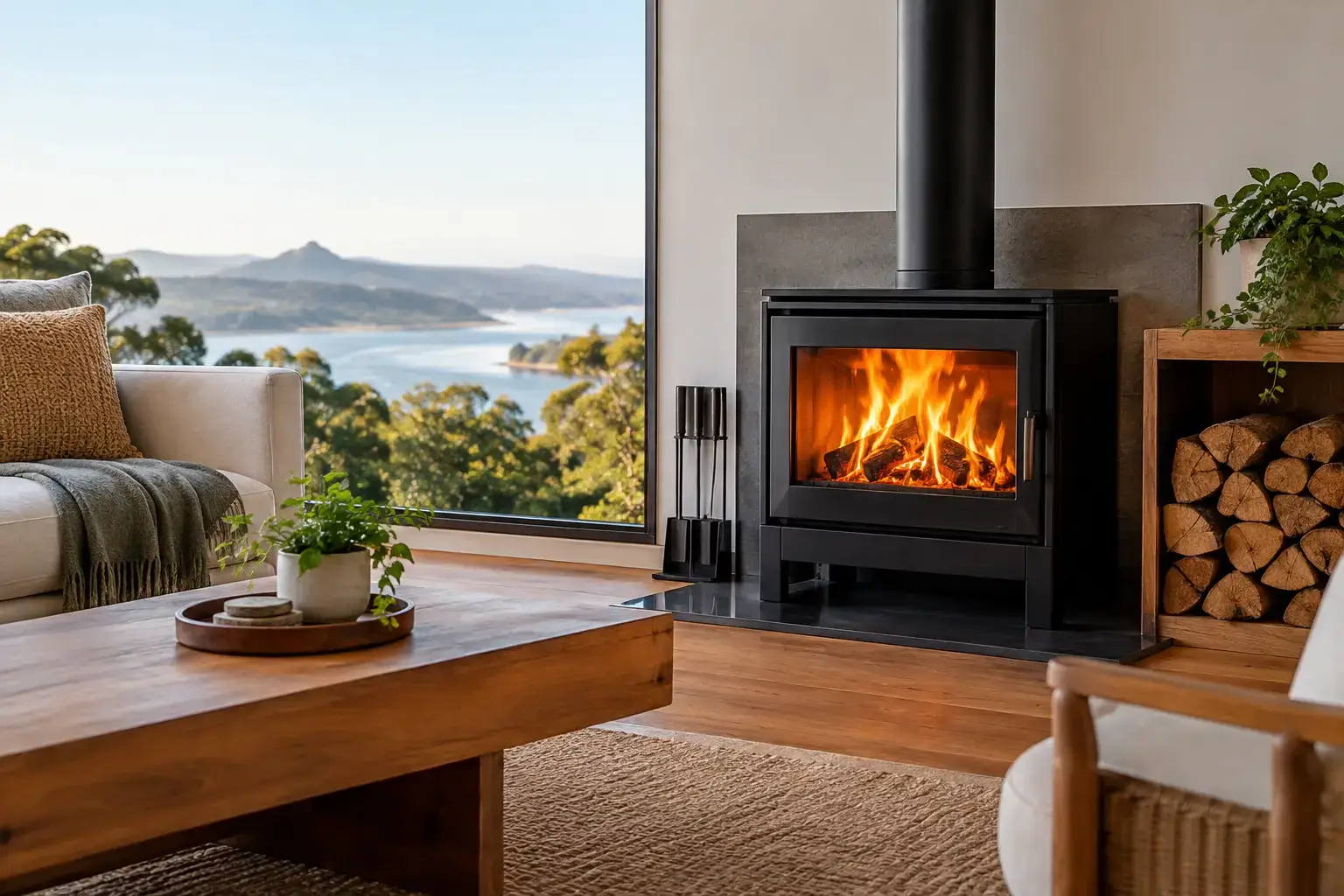
A wood fireplace offers the crackle, aroma and strong radiant heat many homeowners want. Modern slow-combustion wood heaters can efficiently warm substantial living spaces when correctly sized and operated. They are especially appealing for households that enjoy the ritual of lighting a fire and have room to store a dry wood supply.
The trade-off is effort. You will need seasoned firewood, regular ash removal, safe storage and a willingness to tend the fire. The flue system is equally important. Its route through the home, roof penetration, clearances and height all affect performance and installation cost.
Choose a quality, approved wood heater and use dry hardwood rather than damp or treated timber. Wet wood creates more smoke, less heat and a dirtier flue. In coastal areas, consider the location of your wood store so fuel stays dry through heavy rain and humid spells.
Gas fireplaces for heat at the push of a button
Gas fireplaces bring instant warmth and a convincing flame without the woodpile, ash or daily fire-building. They work beautifully in busy family homes, renovations where convenience is a priority and living rooms used regularly after work. Many models offer remote control, adjustable heat and flame settings, making it easier to fine-tune comfort as conditions change.
Your available gas supply matters. Some homes have natural gas, while others will require LPG. This affects the model and installation approach, so confirm it early. Gas fireplaces also need professional installation and, depending on the model, a compliant flue or balanced flue system.
A gas fireplace can be a smart middle ground for homeowners who love the look of a real flame but prefer a clean, low-fuss routine. Premium options from brands such as Escea, Rinnai, Kemlan and Heat & Glo offer a broad range of contemporary and traditional looks.
Electric fireplaces for flexible design
Electric fireplaces are often the simplest route to an indoor feature fireplace. They do not need a flue, wood storage or gas connection, opening up more placement options in apartments, renovated rooms and homes where running a flue is difficult. Many can be built into a media wall, installed beneath a television with correct clearances, or used to add ambience to a bedroom or dining room.
The flame effect is visual rather than combustion-based, but modern electric units can look impressively realistic. They are easy to operate and may allow you to enjoy the flame effect without heat, which is handy when entertaining in warmer months.
Their heating output is usually best suited to smaller spaces or supplementary warmth rather than whole-home heating. If your main living room is large and open, do not assume an electric fireplace will replace a properly sized wood or gas solution.
Bioethanol fireplaces for a flue-free flame
Bioethanol fireplaces provide a genuine flame without a flue, making them attractive for design-led spaces where a traditional installation is not practical. They can deliver atmosphere and localised warmth, but they are not always the right answer for a large room that needs dependable winter heating.
They require careful operation, suitable ventilation and safe fuel handling. Always follow the manufacturer’s instructions, allow the burner to cool before refuelling and consider whether the ongoing fuel cost fits how often you expect to use it. For some homes, bioethanol is a striking feature; for others, it is best paired with another heating source.
Plan the installation early
A fireplace is not a late-stage decorating decision. Bring it into the building or renovation plan as early as possible, particularly for wood and gas models. Early planning gives your installer room to design the flue path, check clearances from combustible materials, coordinate trades and position the unit where it can heat effectively.
For a wood fireplace, allow for the hearth, shielding, flue, roof work and required clearances. For gas, account for the gas connection, ventilation requirements and flue configuration. With electric fireplaces, confirm the electrical supply, framing dimensions and access for future servicing.
Your installer should work to the applicable Australian standards, manufacturer requirements and local approval processes. Do not make decisions based only on a fireplace image or an assumed installation cost. Two homes can use the same model but need very different installation work because of roof design, wall construction, ceiling height or access.
Make the fireplace part of the room
The surround changes the character of a fireplace as much as the appliance itself. A sleek linear gas or electric model can suit a contemporary coastal renovation, while a freestanding wood heater adds warmth and presence to a more relaxed family living area. Stone, rendered masonry, tile, timber-look finishes and simple painted plasterboard can all work, provided clearances and heat requirements are respected.
Consider furniture placement before installation. You need a comfortable viewing angle, safe circulation around the unit and enough distance for sofas, rugs and curtains. A fireplace should anchor the room, not force everyone to perch at the edge of it.
If you are combining a fireplace with a television, check the appliance guidance carefully. Heat management, mantel depth, wall construction and TV positioning matter. A recessed screen directly above a fireplace may look tidy in a plan but can be unsuitable without the right design details.
Look beyond the purchase price
The upfront cost is only one part of owning an indoor fireplace. Include installation, flue components, hearth work, electrical or gas connections, annual servicing and fuel in your budget. A less expensive appliance can become the costlier choice if it is difficult to install or lacks the heating performance your room needs.
Efficiency also deserves attention. A well-chosen, correctly installed fireplace can make the main living area more comfortable and reduce reliance on other heating during the colder months. But it depends on your home’s insulation, the way you use the room and the climate control already in place.
Think about maintenance realistically. Wood heaters need regular cleaning and flue inspections. Gas fireplaces should be serviced by a qualified technician. Electric units are lower maintenance but still benefit from keeping vents clear and checking components as recommended. The right fireplace is one you will enjoy using, not one that becomes another job on the weekend list.
See the flame before you decide
Photos are useful, but fireplaces are a sensory purchase. In a showroom, you can compare flame appearance, heat output, door styles, finishes and the practical details that do not always show up online. You can also talk through your floorplan and get clearer advice on what will suit a Northern Rivers home.
At Ballina Heating and Outdoor Leisure, homeowners can explore recognised fireplace brands and discuss options with people who understand the local climate, renovation considerations and the value of getting the installation right. Bring room measurements, photos and any building plans with you.
Choose the fireplace that makes your home feel easier to enjoy on a cool evening: warm where it matters, suited to your routine and built to be part of many relaxed nights with family and friends.